

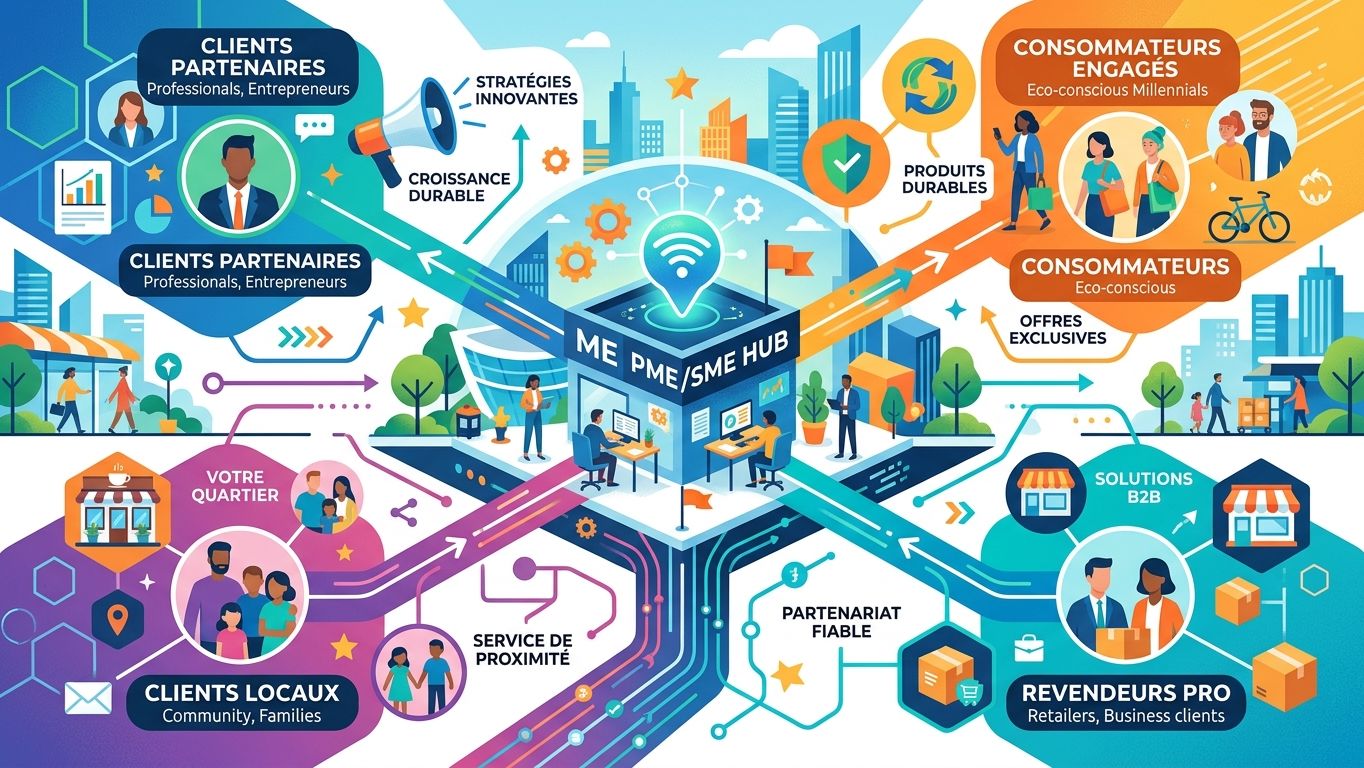
Many SMEs invest time and budget in their digital communication, then are surprised by disappointing results. The problem is almost never the chosen channel. It's the lack of precise knowledge of the target audience.
Why a generic message no longer converts

Audience segmentation is not a concept reserved for large brands. It is the basic condition for every euro invested in communication to be effective.
A generic message speaks to everyone – and therefore to no one. The result: anaemic click-through rates, campaigns that trigger no action, and a vague feeling that "digital doesn't work for us".
The figures are clear: personalising email campaigns increases the conversion rate by +17% and the open rate by +14% (SEO.com, 2026). This is not magic – it is simply the result of a message that corresponds to a reality experienced by the recipient.
What exactly is audience segmentation?
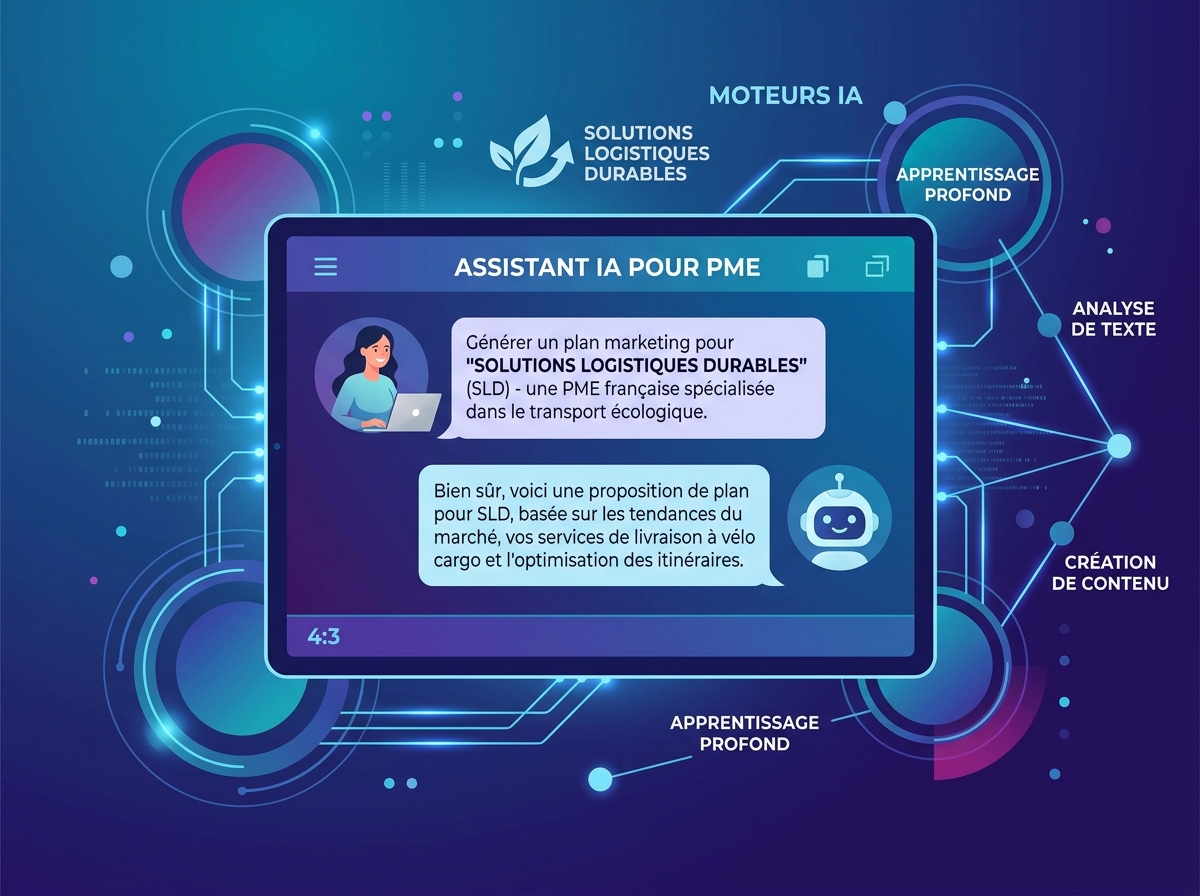
Knowing your audience means answering three fundamental questions:
- Who are your ideal customers (age, sector, situation, decision-making role)?
- What problems are they trying to solve, and what frustrations are holding them back?
- How do they behave online (channels used, type of content consumed, time of search)?
Segmentation then involves grouping these profiles into homogeneous subsets to adapt the message, offer, and channel to each group. A B2B service SME does not have the same interlocutors as a local business – and even within the same company, the CEO and the operations manager do not expect the same discourse.
Segmentation is not an added complexity. It's what finally makes your communication effective.
Step 1: Build your buyer personas
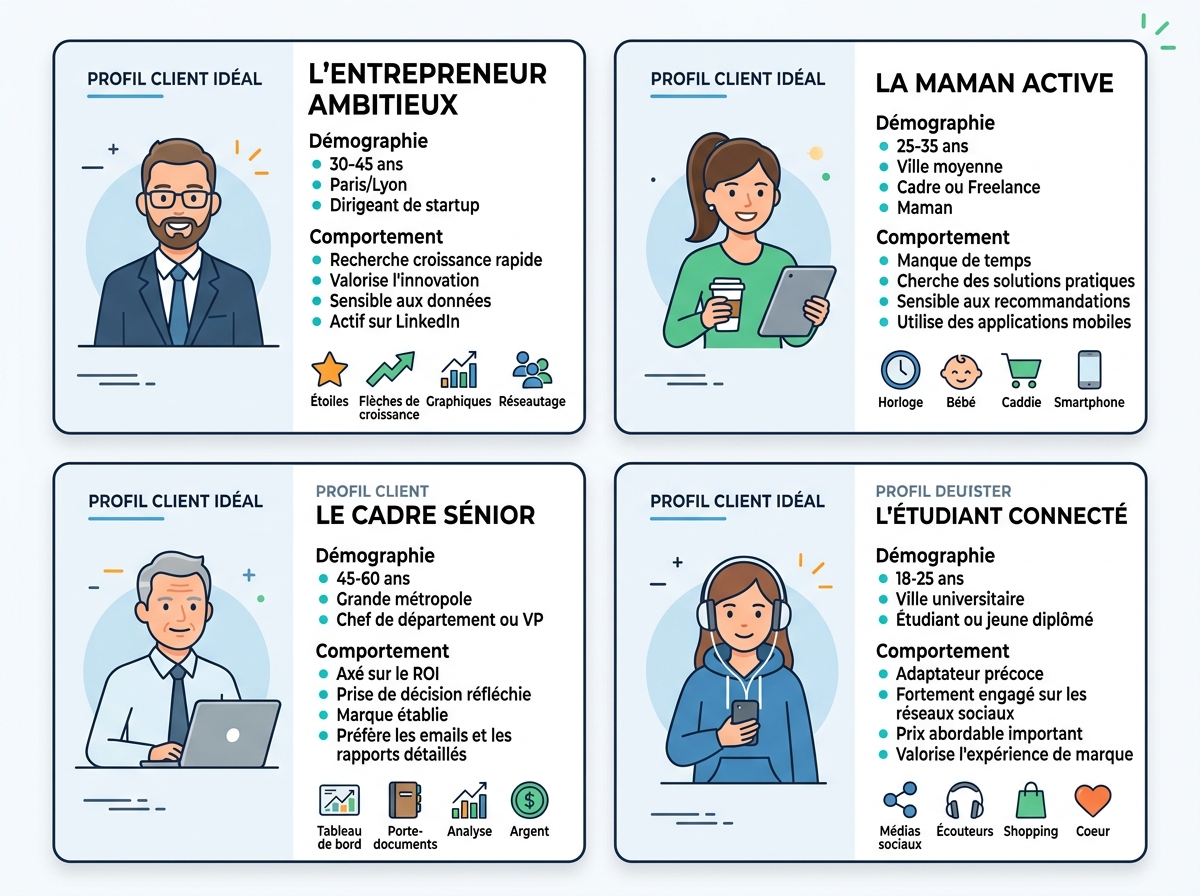
A buyer persona is a semi-fictional representation of your ideal customer, built from real data. It is not a theoretical exercise: it is an operational tool that guides every content, channel, and message decision.
For each persona, document:
- Demographic data – age, location, industry, company size
- Goals and motivations – what they seek to achieve, their success metrics
- Pain points – the concrete obstacles preventing them from progressing
- Digital behaviours – social networks used, preferred formats, connection times
- Frequent objections – what prevents them from buying or engaging
A craftsman who renovates high-end kitchens does not have the same persona as an HR consulting firm. Yet, many SMEs use exactly the same message for both. This is where most of the budget is lost.
Step 2: Leverage your existing data
No need to rebuild everything from scratch. You already have valuable data – you just need to look at it with the right perspective.
Google Analytics (or GA4) tells you which pages grab attention, where your traffic comes from, and on which devices your visitors browse. These are direct behavioural signals.
Your social networks reveal which content generates real engagement (comments, shares) versus simple passive consumption (likes). The difference is crucial for identifying what truly resonates.
Your CRM or customer history, even basic, contains patterns: which profiles buy fastest, which require the most support, which sectors generate the most value.
If you use a tool like HubSpot to centralise this data, it's useful – but be aware of the learning curve and the entry cost, often prohibitive for an SME without a dedicated marketing team. The goal is not to have the most powerful tool, but to have a clear and actionable understanding of your data.
Step 3: Segment according to criteria that make sense for your business
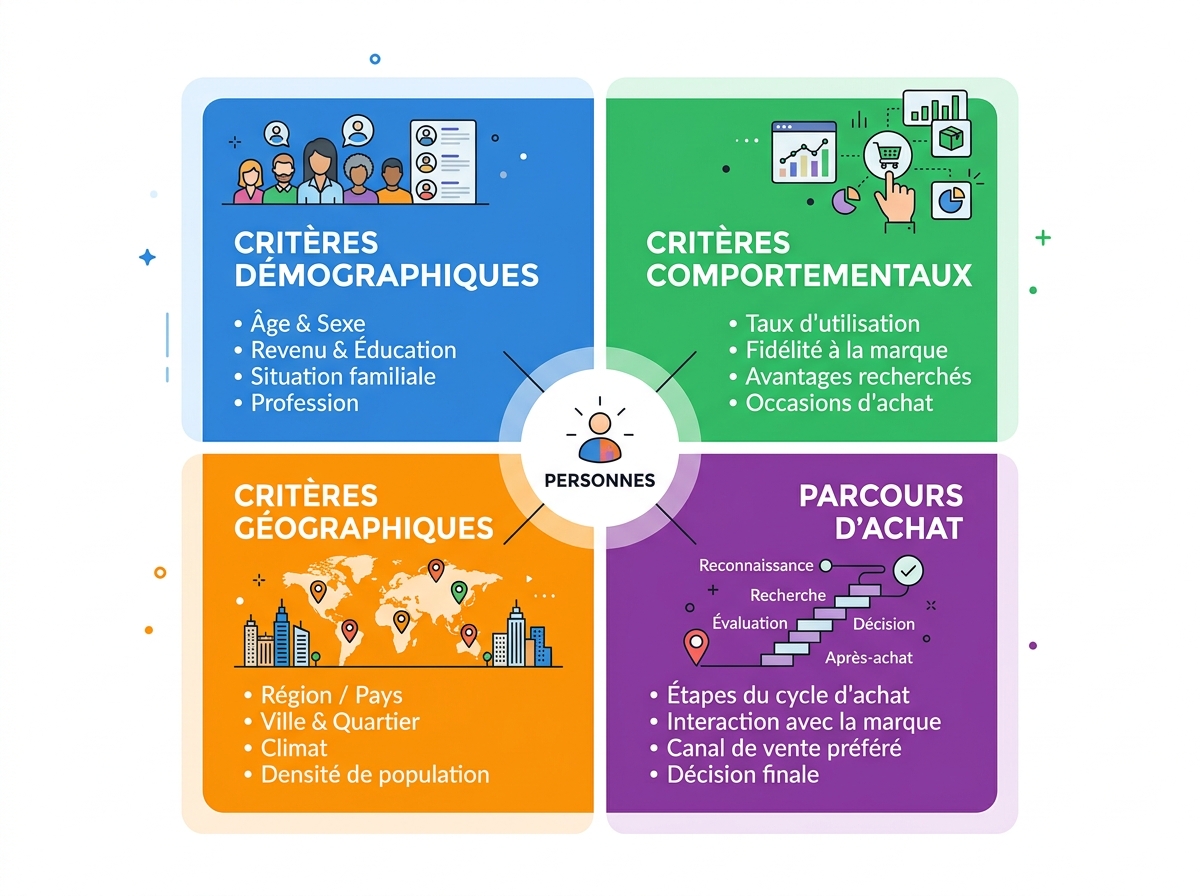
Not all segmentation criteria are equal. Here are the most relevant depending on the context:
Demographic and firmographic segmentation
Age, gender, location, sector, company size, turnover. Useful for calibrating tone and level of discourse.
Behavioural segmentation
Visit frequency, pages viewed, actions taken (download, form, abandoned cart). This is the most actionable for triggering a follow-up or a targeted offer.
Segmentation by stage in the buying journey
A prospect discovering your brand for the first time does not need the same message as an existing customer to whom you are offering an upgrade. This distinction alone can transform your results.
Geographic segmentation (for local businesses)
For local businesses and services, location remains a decisive criterion. A campaign targeted within a 15 km radius of your establishment will always be more effective than a diluted national message. This is one of the levers we work on in our 360° local visibility audit.
What segmentation truly changes in your results
The effects of well-executed segmentation are measured at several levels:
- Increased engagement rates: Personalised content generates more clicks, more time spent, more feedback.
- Reduced acquisition cost: You stop spending on unqualified audiences. Targeted ad retargeting increases conversions by +70% (SEO.com, 2026).
- Enhanced loyalty: 86% of consumers value a brand's authenticity (Les Echos Solutions, 2026). A message that resonates with them builds this authenticity.
- Better ROI clarity: When each segment is tracked separately, you precisely identify what works – and what needs to be stopped.
Specifically: an SME in the professional training sector that segmented its prospects into three groups (SME managers, SME HR, freelancers) multiplied its email campaign response rate by 2.3 in six weeks, simply by adapting the entry angle of each message.
Segmentation and AI visibility: the new challenge
With the rise of generative search engines (ChatGPT, Gemini, Perplexity), knowing your audience takes on an additional dimension. These tools answer user questions by citing sources – and they cite brands that have built a clear and consistent entity reputation on the web.
If your content precisely answers the questions of your target segments, you increase your chances of being cited in these AI-generated responses. This is called GEO (Generative Engine Optimization): being visible not only on Google, but in the answers that AI gives to your potential customers.
This starts with a deep understanding of what your audiences are looking for – their exact questions, their phrasing, their doubts. Segmentation is therefore no longer just a conversion lever: it is a visibility lever in the age of AI.
To delve deeper into this topic, our semantic audit precisely analyses how your content responds (or not) to your targets' search intentions.
Where to start if you're starting from scratch?
No need for a six-month project. Here's a realistic sequence for an SME:
- Week 1 – List your top 3 current customers. Describe them in detail: who they are, why they chose your offer, what they told you during the sale.
- Week 2 – Connect to GA4 and identify the 3 most visited pages and the 2 best-performing traffic sources.
- Week 3 – Write a different message for each identified profile. Test it on an email or a LinkedIn post.
- Week 4 – Measure the results, adjust, and document what worked.
It's iterative, not perfect from the start. The goal is not to have the most detailed persona on the market – it's to stop talking to everyone in the same way.
If you want to go faster and avoid common mistakes, a 360° visibility audit can identify priority segments and the most effective message angles for your specific business in just a few days.