


You publish, you create, you relaunch – and yet your phone remains silent. 84% of French VSEs/SMEs have an online presence (France Num Barometer 2025), but only 40% see a real impact on their turnover. The gap between "being present" and "being visible" widens every month. Here are the five mistakes that explain this gap – and how to correct them now.
Mistake #1: Talking to everyone, therefore convincing no one

The natural reflex of an SME is to want to reach as many people as possible. The result: messages that are too generic, ignored by everyone. 47.9% of internet users search for information about a brand before buying (We Are Social × Meltwater, 2025) – which is to say they compare, and only the most precise message captures their attention.
The concrete solution: build a customer persona in three questions.
- Who is your ideal customer? (sector, size, decision-making role)
- What specific problem costs them time or money?
- On which platform can they be found when they are looking for a solution?
A tradesperson targeting "homeowners over 20 years old within a 30 km radius" converts three times better than a tradesperson targeting "individuals". This is not an intuition; it's the effect of relevance on the algorithm AND on the human reader.
Mistake #2: Acting without strategy, wasting unknowingly
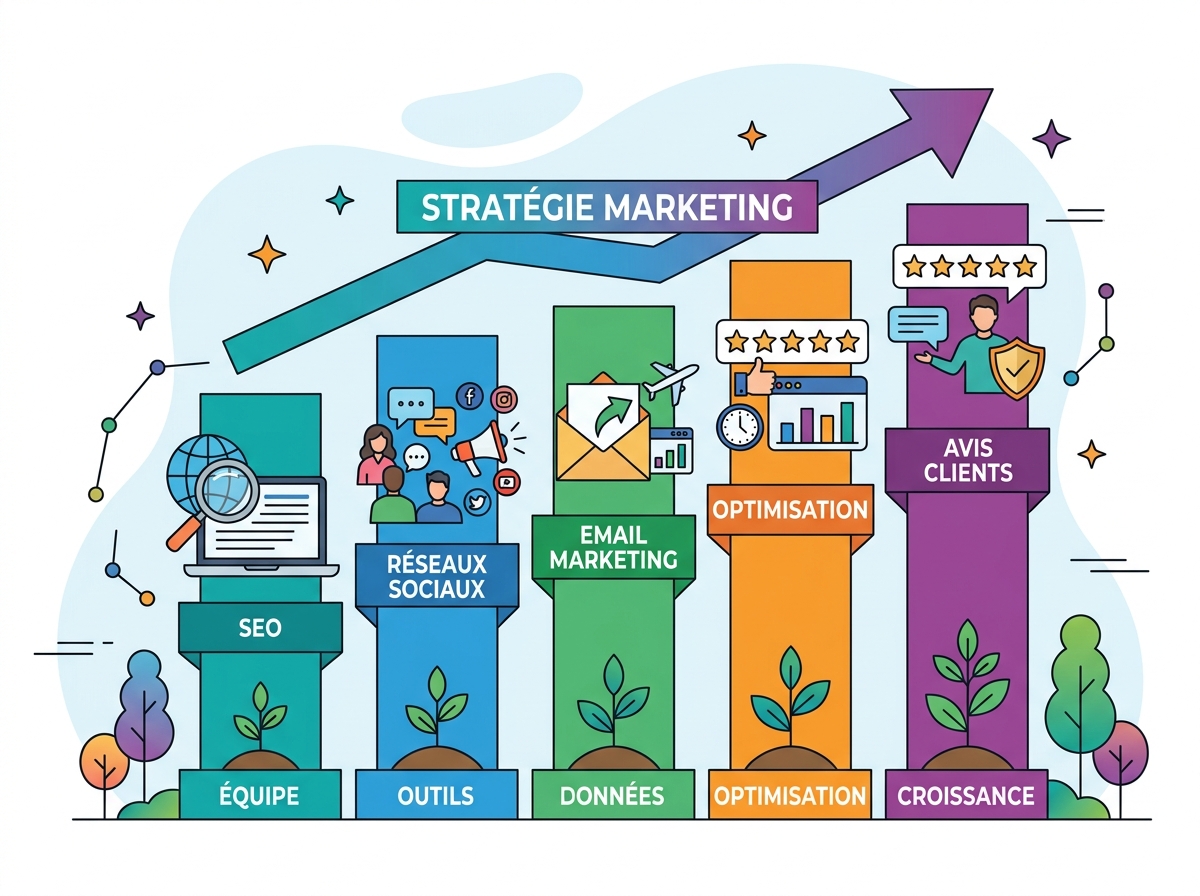
Publishing without a plan is expending energy without capitalising. 55% of VSE/SME leaders cite lack of time as the primary digital barrier (France Num 2025) – which makes every hour poorly invested doubly costly.
A marketing strategy rests on three pillars:
- Measurable objectives: +20% organic traffic in 6 months, 10 qualified leads per month, 4 Google reviews per week.
- An editorial calendar: even minimal – 2 posts per week, 1 blog article per month, 1 monthly newsletter.
- The 80/20 rule: 80% useful content (advice, case studies, answers to objections), 20% promotional content.
Without this framework, you react to current events instead of building an audience. With it, each piece of content accumulates and generates traffic long after its publication.
Case study: for an independent consultant supported by Digitalyser, implementing an 8-week editorial calendar multiplied the LinkedIn engagement rate by 2.4 in less than 3 months – without additional advertising budget.
Mistake #3: Ignoring SEO and leaving your website as a dead shop window
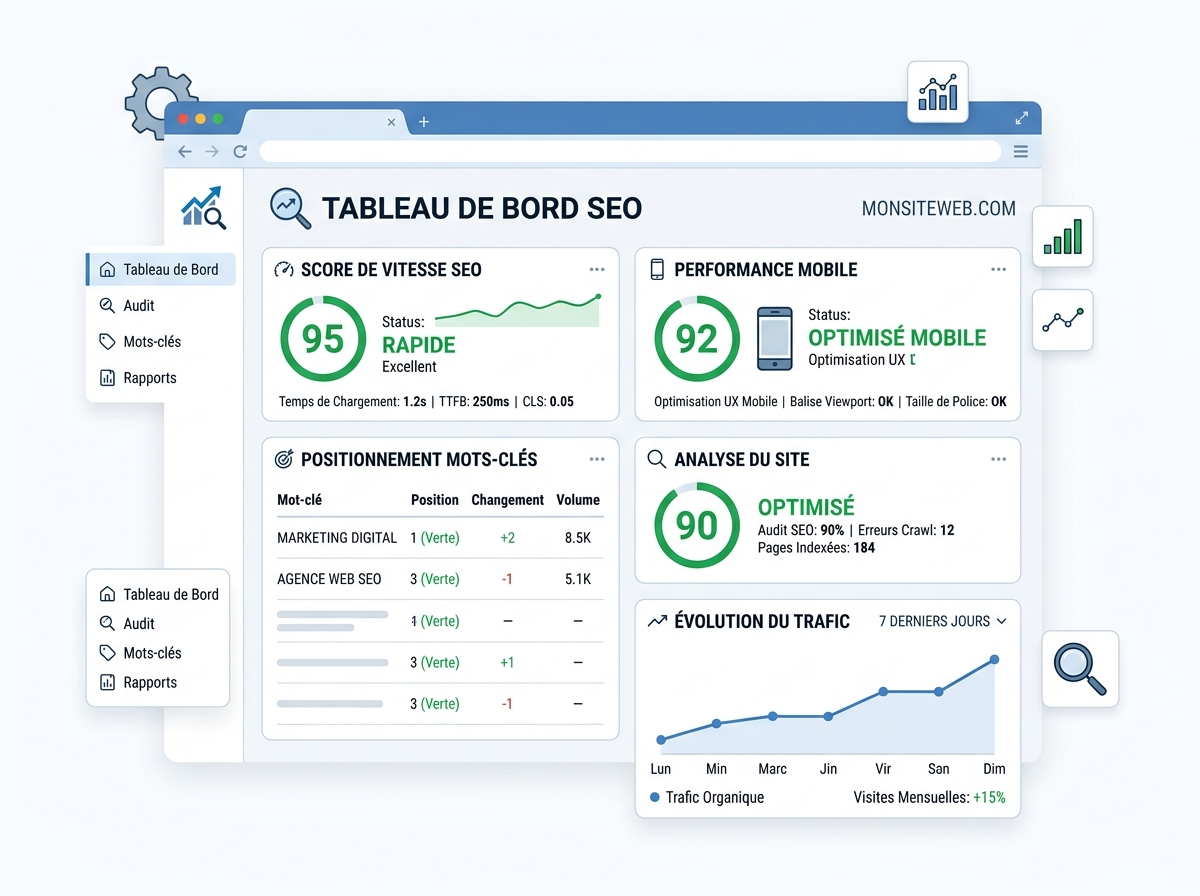
A website without SEO is a shop without a sign on a street with no passers-by. 51% of content consumed on the web comes from organic searches (Forbes, 2024). Yet, only 65% of French VSEs/SMEs have a website – and among them, a minority actually optimises it.
The three priority SEO levers for an SME:
- Long-tail keywords: "emergency plumber Lyon 3rd" converts better than "plumber". Target intent, not volume.
- Loading speed: Google penalises slow pages. A 3-second delay is enough to lose 53% of mobile visitors (Google, 2023).
- Mobile experience: 66% of local searches are done from a smartphone. A non-responsive site = lost customers.
Tools like Screaming Frog or Semrush can technically audit a site, but their handling requires time and expertise that most SMEs do not have in-house. A 360° visibility audit carried out by Digitalyser provides a prioritised roadmap in a few days, without having to master ten different tools.
Mistake #4: Broadcasting without interacting, and losing the algorithm
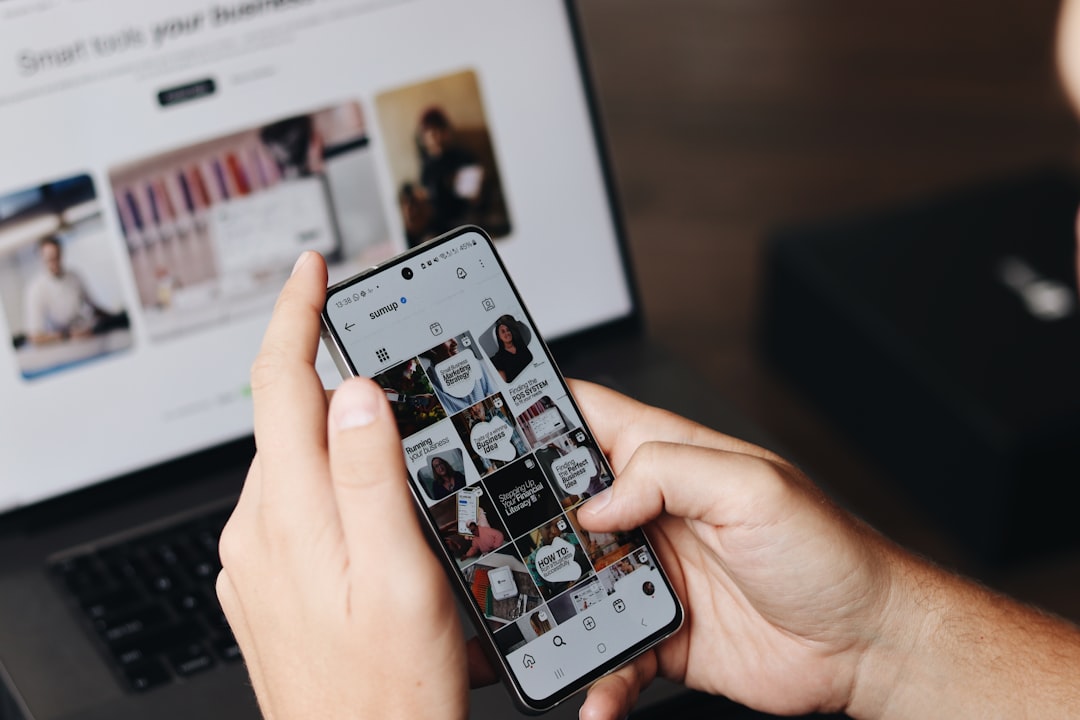
Social networks are not a billboard. 89% of B2B marketers use social networks in their content strategy (Content Marketing Institute, 2025), but the majority simply publish without engaging. However, the algorithms of LinkedIn, Instagram, and Facebook explicitly reward accounts that create conversation.
Becoming an actor rather than a broadcaster, concretely:
- Respond to every comment within the first 60 minutes (algorithmic boost window).
- End your posts with an open question, not a link.
- Use interactive formats: polls, questions in stories, short live sessions.
- Comment on your clients' and partners' publications – your name appears in their networks.
A post that generates 10 comments will be shown to 3 to 5 times more people than a post without interaction, for the same audience. Engagement is not a bonus: it is the fuel for organic reach.
Mistake #5: Not measuring, and repeating the same mistakes
Without data, you are navigating blindly. 34% of marketers state that the number of clicks is their main indicator (Klaviyo, 2024) – but clicks without context say nothing about what actually generates customers.
The KPIs to track according to your objective:
Objective | Key Indicator |
|---|---|
Visibility | Impressions, organic reach, SEO positions |
Engagement | Engagement rate, shares, comments |
Acquisition | Conversion rate, cost per lead, bounce rate |
Loyalty | Email open rate, customer reviews, NPS |
The simple rule: measure a maximum of 3 indicators per objective. Too much data kills decision-making. Have a 20-minute weekly review, adjust only one parameter at a time, and observe the effect over 4 weeks.
Beware of HubSpot dashboards or automated Buffer reports: they provide abundant figures, but without interpretation adapted to your sector and size, you risk optimising what shines rather than what converts.
What successful SMEs do differently
Businesses that improve their marketing results don't do more – they do better. They have a defined target, a simple plan, an optimised website, an active social presence, and data they actually read.
It's not a question of budget. 40% of VSEs/SMEs that use digital tools in a structured way see an increase in their turnover (France Num 2025). The difference often comes down to a single trigger: knowing precisely where the shoe pinches.
This is exactly what a free visibility audit allows: identifying in less than 48 hours the 2 or 3 friction points that are blocking your results – SEO, reputation, local presence, brand consistency. Without commitment, without jargon.
If you want to go further on any of these levers, the Digitalyser SEO support or the services page detail the formulas adapted to SMEs that want measurable results, not promises.