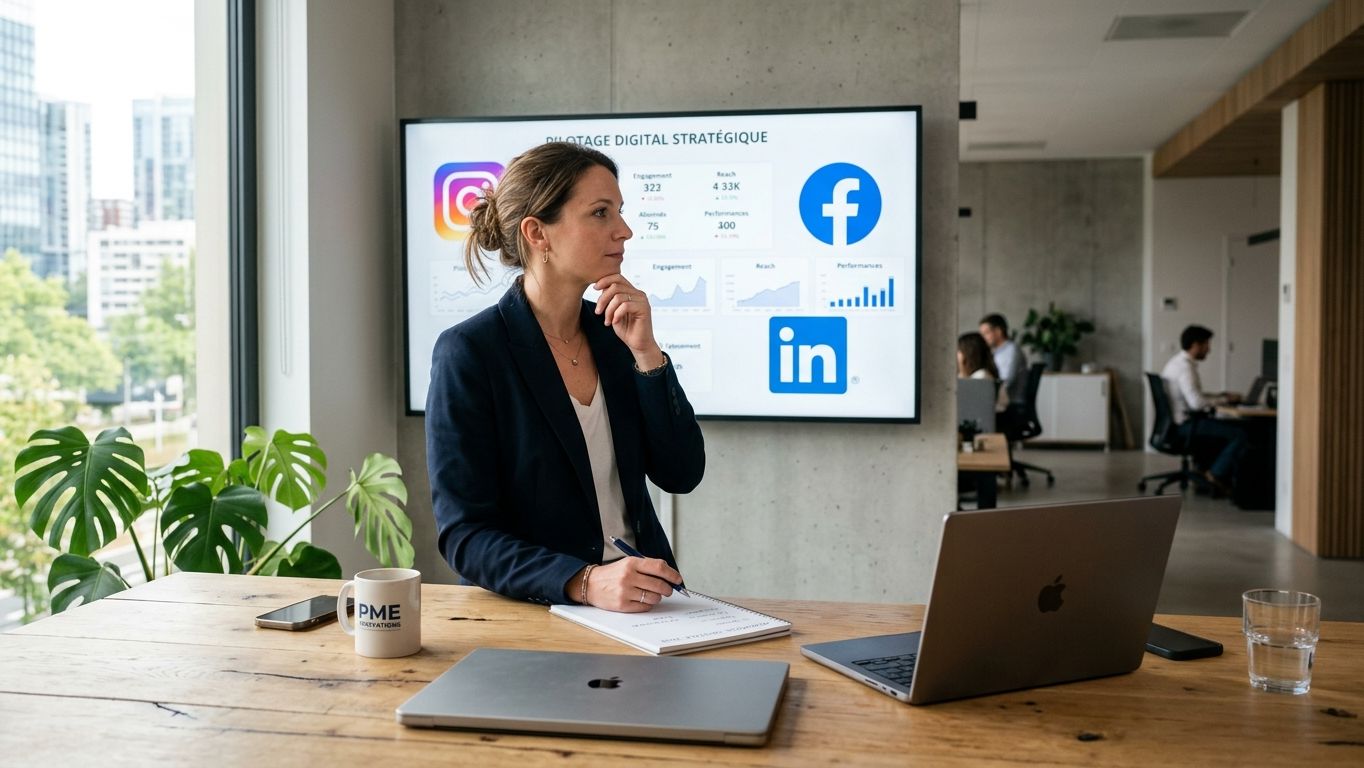
Three platforms, millions of users, and your communication budget can't be everywhere at once. The real problem isn't whether you should be on social media – it's choosing the right network so you don't waste your energy.
Why choosing a social network is a strategic decision
Many SMEs make the same mistake: they open accounts everywhere, post sporadically, and conclude that "social media doesn't work". In reality, the problem isn't the platform, it's the suitability between your offering, your audience, and the chosen network.
In 2026, Facebook has 31.5 million active users in France, Instagram 28.2 million, and LinkedIn 37 million (source: Blog du Modérateur). These figures don't tell the whole story: user intent, age group, and content consumption habits vary radically from one platform to another.
Choosing the right network means choosing where your message will be received, understood, and converted.
Instagram: capturing attention with visuals and emotion
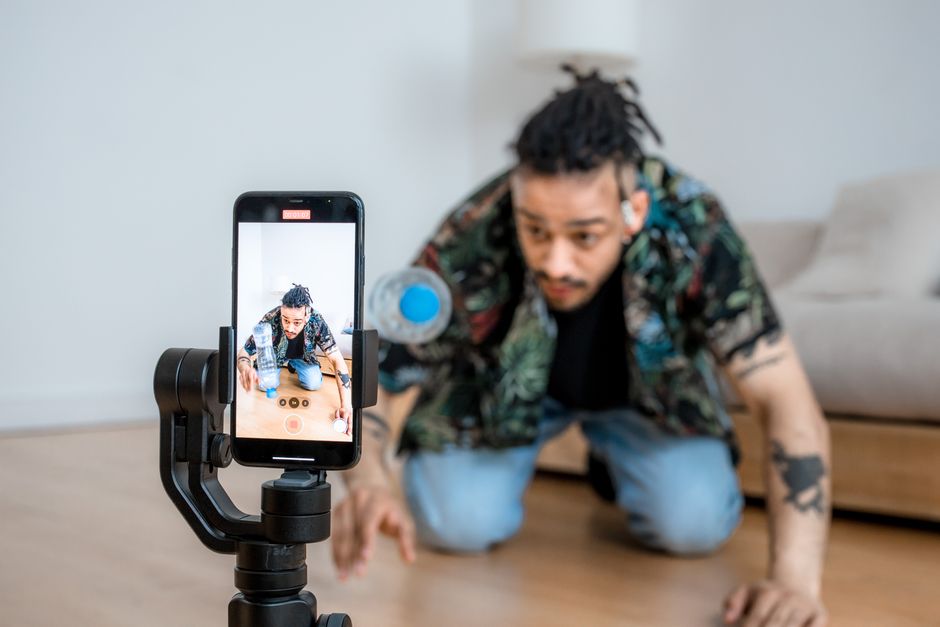
Instagram is the platform for visual desire. If your offering is visual – artisanal product, aesthetic service, customer experience – you have a structural advantage here.
With 3 billion users worldwide and an engagement rate boosted by Reels and Stories, Instagram remains essential for brands that rely on imagery. 70.2% of users share photos and videos there (BDM, 2026).
Who really benefits?
- Artisans, creators, e-commerce businesses (fashion, jewellery, decor, food)
- Restaurants, hairdressers, lifestyle coaches
- Freelancers building a strong personal brand
Instagram's algorithm rewards regularity and interaction. An account that posts 3 Reels per week with a strong hook consistently outperforms an account that posts one beautiful photo every 15 days. The visual consistency of your feed is no longer enough – short video content is what captures attention.
Limitations not to ignore
Direct conversion remains a weak point: without an optimised website or integrated shop, turning a follower into a customer requires several steps. And the algorithm is demanding – a two-week break can halve your reach.
Facebook: selling, building loyalty, and targeting locally

It's been declared dead since 2018. Yet it's still here, with 31.5 million active users in France and some of the most precise advertising tools on the market.
Facebook remains the go-to platform for local SMEs: shopkeepers, service providers, trainers, associations. Its strength? The combination of community groups + Facebook Ads + integrated sales tools.
A well-managed Facebook group around a business theme can generate more qualified leads than an Instagram account with 5,000 followers. Why? Because group members have chosen to be there – the intent is present.
What Facebook specifically allows:
- Ultra-precise advertising targeting by geographical area, age, interests
- Integrated shop for e-commerce businesses
- Events and live streams to humanise customer relationships
- Retargeting of website visitors
The reality of organic reach
Without an advertising budget, organic reach on Facebook is low – often 2 to 5% of your audience. This is not a reason to abandon the platform; it's a reason to allocate a minimal budget to it. Even £5 to £10 per day on a well-targeted campaign can produce measurable results for a local SME.
Tools like Hootsuite or Buffer allow you to schedule your posts – but they don't replace a strategy. The real question isn't "when to post" but "what to post for whom".
LinkedIn: building trust in B2B
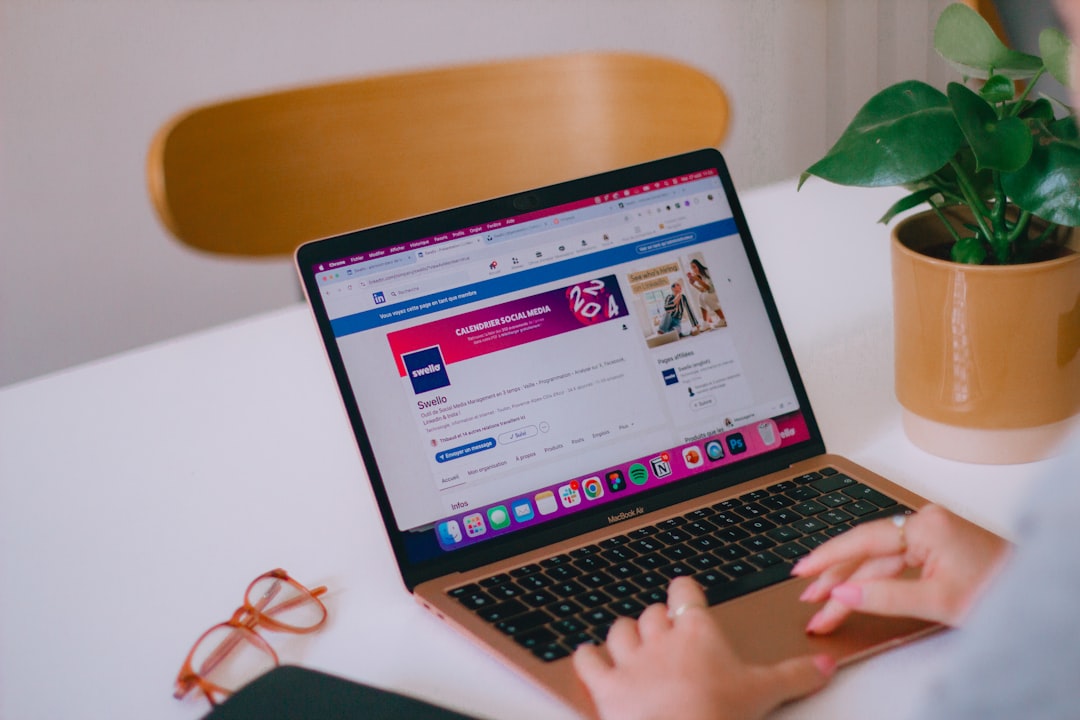
LinkedIn is not a social network like any other. It's a space for professional credibility, where you don't sell directly – you demonstrate your expertise so that prospects come to you.
With 37 million members in France and an audience primarily composed of 25-34 year olds active in business, LinkedIn is the natural playground for consultants, agencies, B2B service providers, and SME leaders who want to shine in their sector.
LinkedIn works if you:
- Work in B2B (selling to other businesses)
- Are looking to recruit or be recruited
- Want to position your expertise in a niche market
- Need credibility before a purchase decision
A LinkedIn post that shares a concrete experience, a surprising figure, or a strong stance can reach 50,000 views without a penny of advertising budget. This is the power of valuable content on this platform.
What LinkedIn doesn't do well
LinkedIn is ineffective for general public B2C offers, low entry prices, or impulse purchases. The sales cycle there is long. And content production requires a real-time investment: generic or overly promotional posts are ignored.
Which network to choose based on your activity?
Here's an operational framework – not a theoretical table, but the result of what we observe on the ground with the SMEs we support:
Profile | Primary Network | Secondary Network |
|---|---|---|
E-commerce / artisan | Facebook (Ads) | |
Local service provider (restaurant, hairdresser…) | ||
B2B consultant / coach | Instagram (personal brand) | |
Trainer / independent expert | Facebook (group) | |
SaaS startup / agency |
The golden rule: master one network before opening a second. A strong presence on one platform is infinitely better than a diluted presence across three.
The mistake 80% of SMEs make on social media
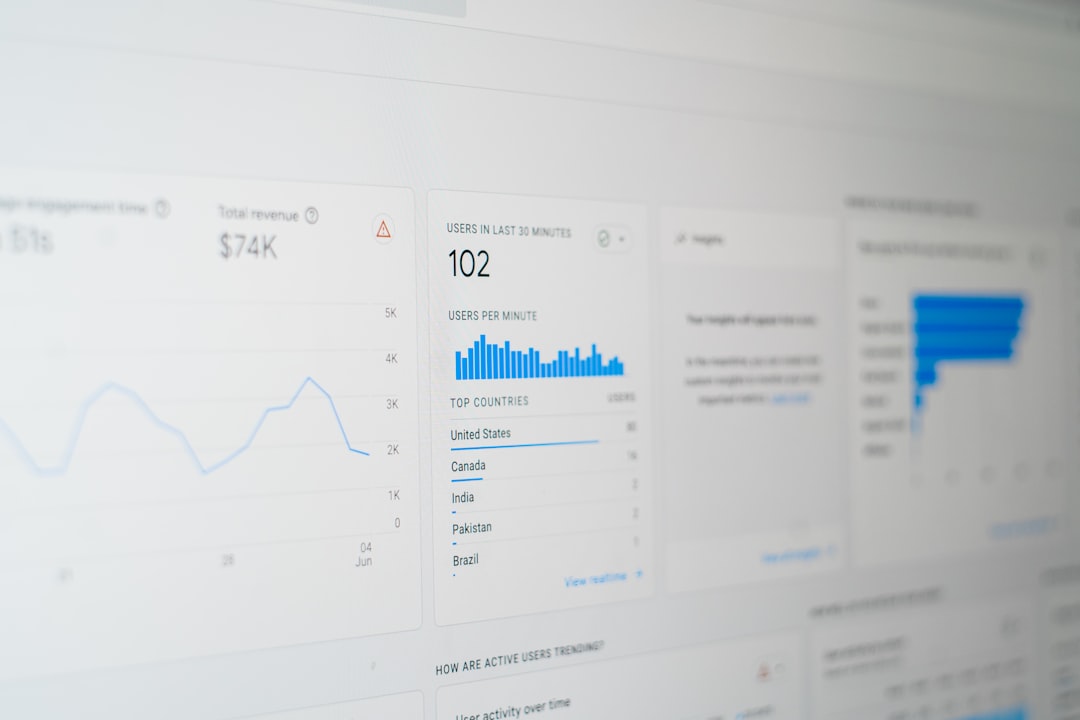
They publish content without a conversion strategy. They measure likes instead of measuring leads. They confuse visibility with profitability.
Visibility on social media is just one step – the first pillar of a complete digital strategy. It must be articulated with your e-reputation, your local SEO, and your ability to convert visitors into customers.
This is exactly what Digitalyser's 360° visibility audit offers: identifying where you are losing potential customers – on social media, on Google, on your business listing – and prioritising high-impact actions.
Tools like Semrush or Hootsuite provide data. But interpreting this data in the context of a local SME, with limited resources, is another skill. That's where support makes the difference.
Social media and AI visibility: the new playing field
Since 2025, a new dimension has been added to the question of network choice: your presence on social media influences your visibility in AI responses like ChatGPT, Perplexity, or Google AI Overviews.
AI agents index and synthesise public content. A company that regularly publishes expert content on LinkedIn – with clear positions, sourced data, and consistent positioning – increases its chances of being cited as a reference in AI-generated responses.
This is called GEO (Generative Engine Optimization): optimising your presence to be visible not only on Google, but in the responses of generative engines. An SME that masters its LinkedIn content today gains a real advantage over its competitors for tomorrow.
To delve deeper into this topic, our SEO service now integrates this GEO dimension into every content strategy.
Where to start concretely?
If you're starting from scratch or want to reposition your social presence, here are the three steps we recommend:
- Audit your current situation: what networks are you using, with what measurable results?
- Choose ONE priority network according to your target (B2B → LinkedIn, visual/local → Instagram or Facebook)
- Define 3 types of recurring content: educational, social proof (testimonials, client cases), direct offer
If you don't know where to start, a free audit can identify the most profitable levers for your specific activity – social media included – in 30 minutes.