35% more clicks on brand queries, 41% more inbound leads in one quarter. These are the figures observed after a Knowledge Panel appeared. If yours is missing, Google — and generative AI — simply don't recognise you as a real entity.
What is the Knowledge Panel and why it changes everything
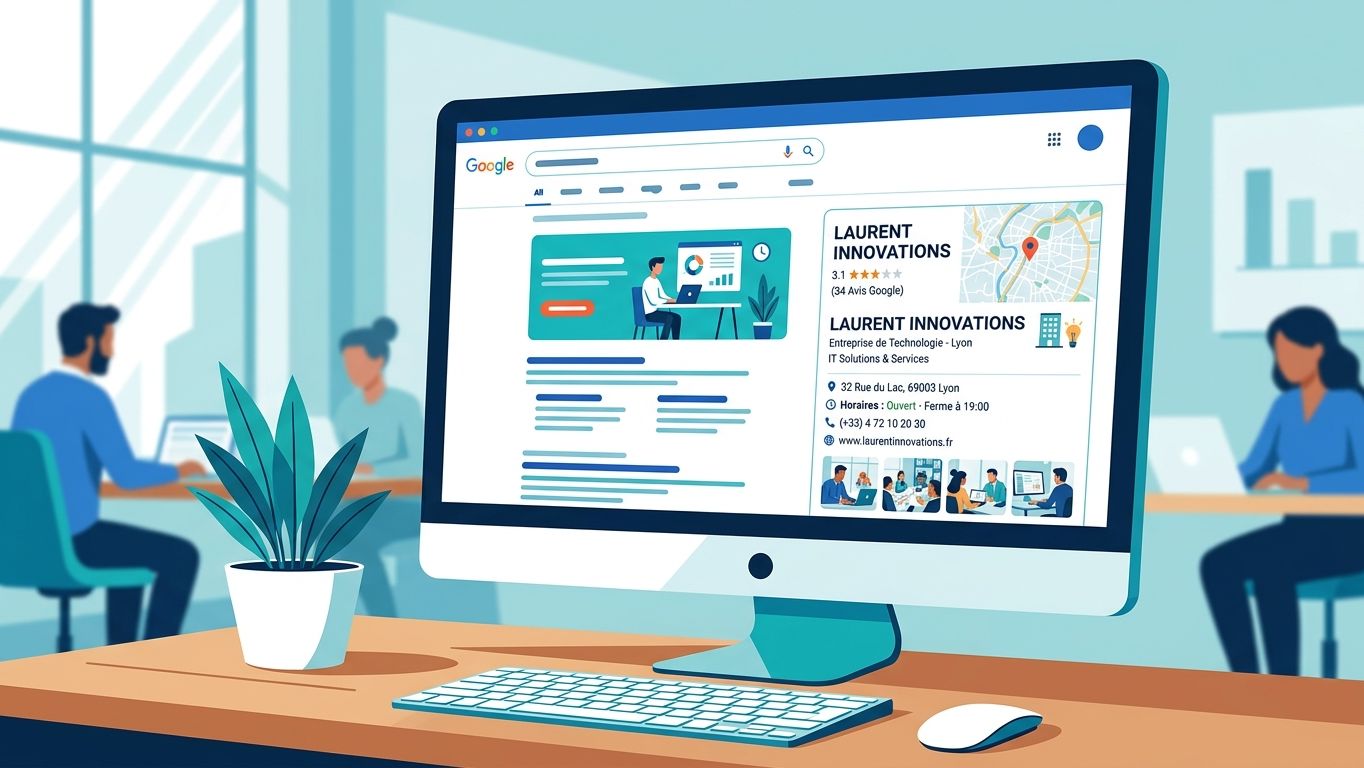
The Knowledge Panel is the information box displayed to the right of Google search results (or at the top on mobile) when a user searches for a brand, company, or person. It aggregates: name, address, phone number, website, opening hours, reviews, logo, and sometimes links to social media.
But it's not just a pretty digital business card. It's the signal that Google has integrated your business into its Knowledge Graph — its database of recognised and verified entities. Without it, you're just a string of words on a page. With it, you're a structured, credible, cited entity.
For an SME, the difference is tangible: 9 out of 10 consumers conduct a Google search before contacting a business (source: NEWP, 2025). If your Knowledge Panel is missing during this search, you lose credibility even before the first contact.
The Knowledge Graph: the database that decides your existence
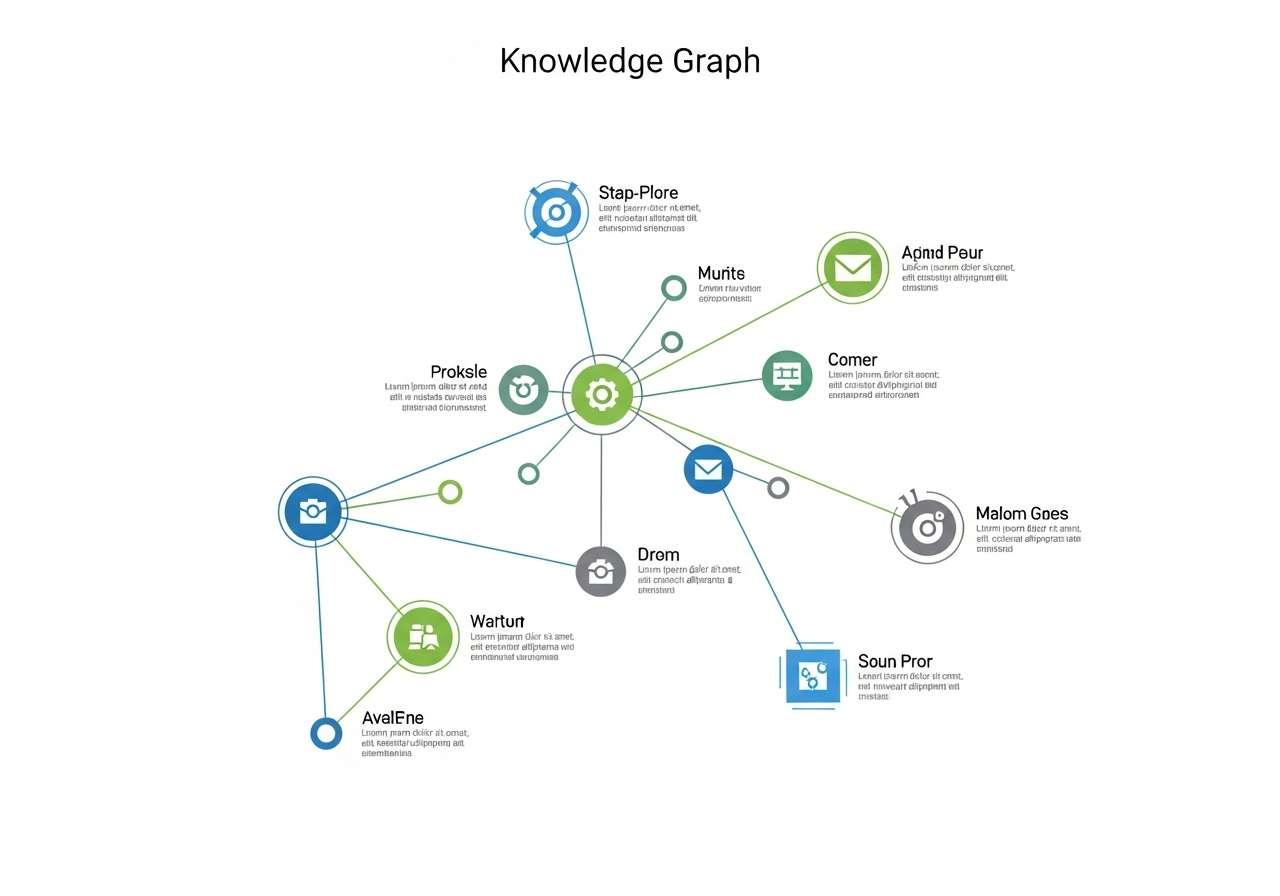
The Knowledge Graph is the invisible engine behind the Knowledge Panel. Launched by Google in 2012, it lists billions of entities — businesses, places, people, concepts — and their relationships. It's what allows Google to understand that "Dupont Plomberie in Lyon" and "Dupont Plomberie SARL" are the same entity, or conversely, to treat them as two distinct and confusing entities.
To appear in it, your business must send consistent and multiple signals: structured data on your site, a complete Google Business Profile, identical mentions in directories, presence on authoritative sources (Wikidata, Wikipedia, local press). Google cross-references, validates, and decides.
One inconsistency is enough to pollute your entry in the Knowledge Graph. A different phone number between your site and Yellow Pages, an abbreviated company name in a directory, an old address not updated: each discrepancy fragments your digital identity and delays — or prevents — the appearance of your Knowledge Panel.
What generative AI does with this entity reputation
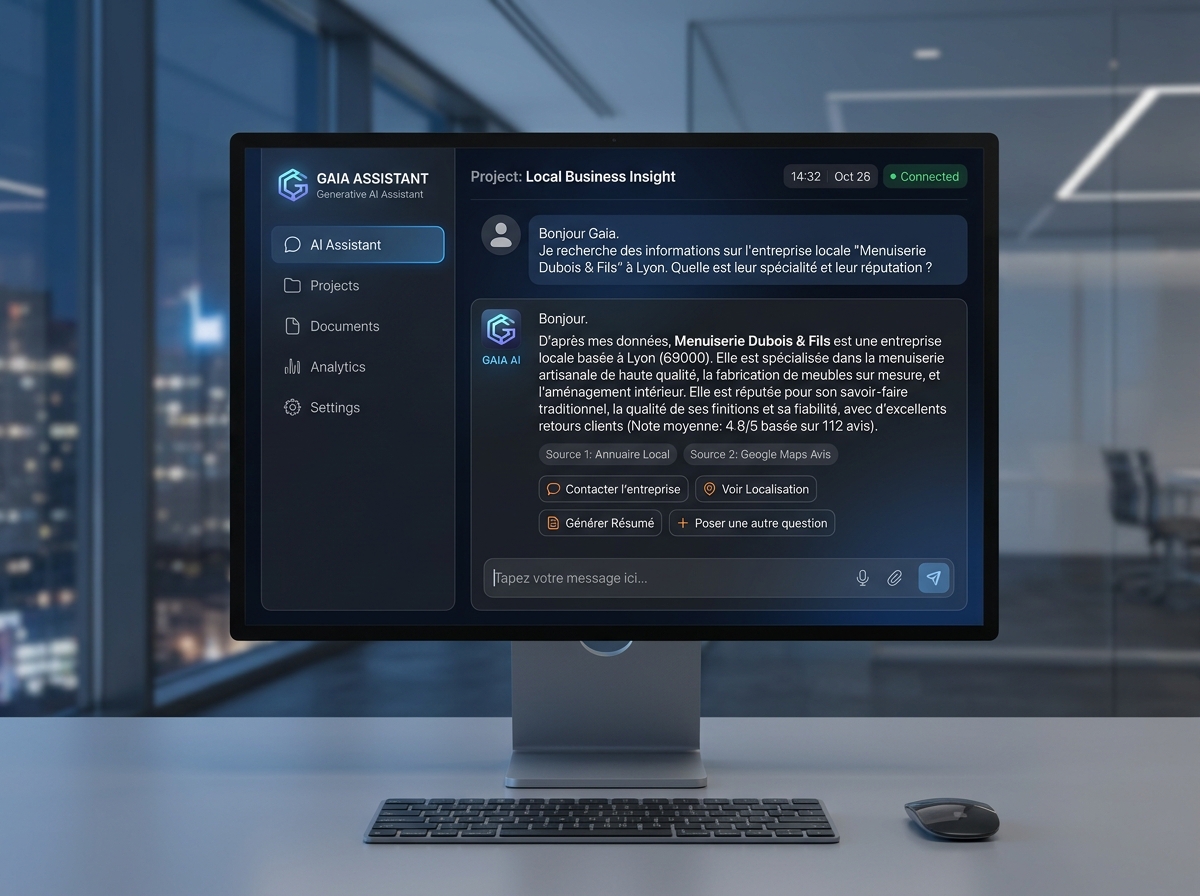
Since 2023, a new dimension has been added: generative AI (ChatGPT, Gemini, Perplexity, Google's AI Overviews) draws heavily from the Knowledge Graph and authoritative sources to construct its responses.
In concrete terms: when a prospect asks ChatGPT "who is the best accountant in Bordeaux?", the AI cites the entities it recognises. Those with a structured entity reputation — Knowledge Panel, Schema.org data, consistent mentions on reliable sources — are much more likely to be cited.
According to 2026 data, approximately 50% of the sources cited in AI Overviews are already in the top 10 organic results. And 60% of searches now end without a click (zero-click). In other words: if you don't exist as a recognised entity, you are absent from both channels — classic SEO and generative AI.
This is the new risk of invisibility for SMEs: not being cited where purchasing decisions are made.
NAP consistency: the foundation no one sees but Google scrutinises
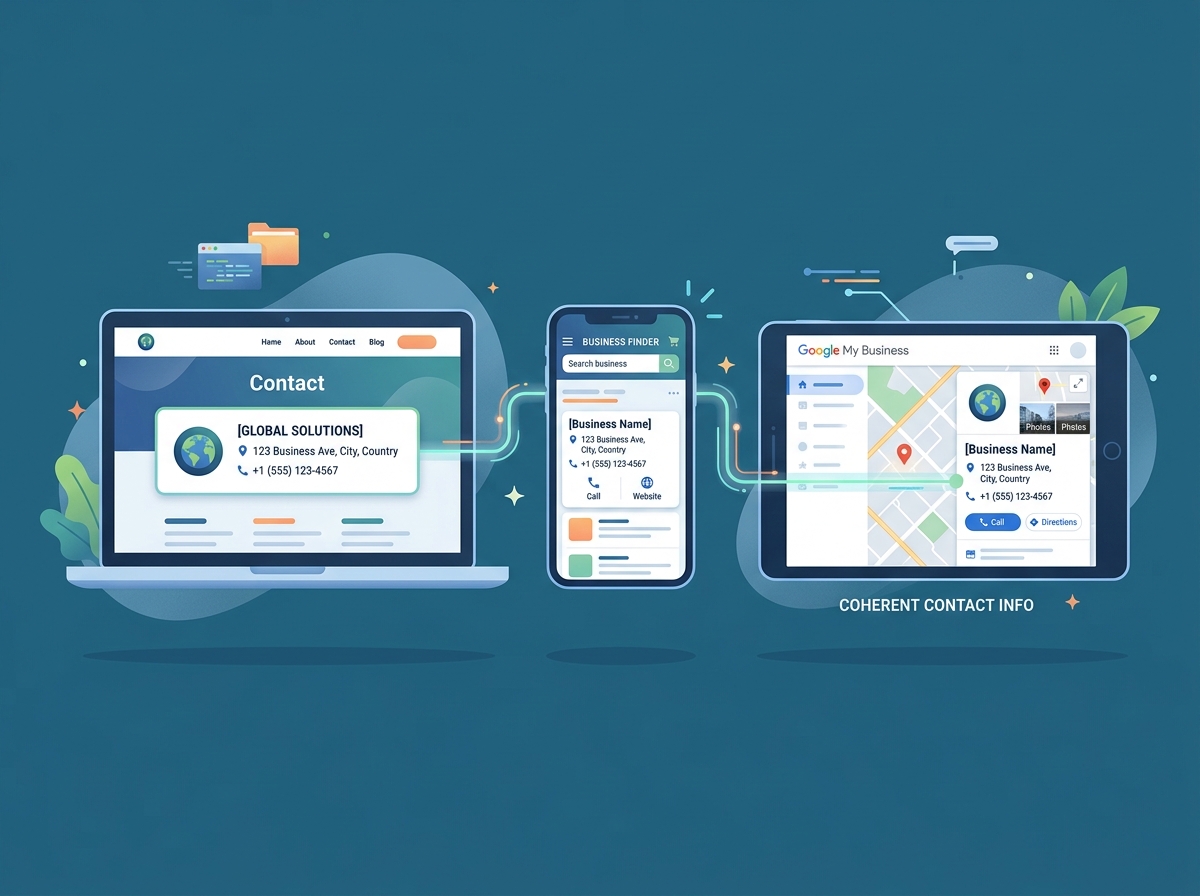
NAP (Name, Address, Phone) is your company's digital signature. It's the first credibility test Google performs: is your information identical everywhere you appear online?
Here's what Google checks by cross-referencing:
- Is your company name written the same way on your site, your GBP listing, directories, social media?
- Does your address use the same format ("Street" vs "St.", number before or after)?
- Is your phone number in the same format (with or without spaces, with or without country code)?
A NOIISE study (2025) confirms it: NAP inconsistencies lead to a measurable loss of credibility in the Local Pack and can lead to invisibility in generative results. In practice, we regularly see SMEs with 15 to 20 contradictory local citations, accumulated over the years without ever having been audited.
The good news: correcting NAP consistency is one of the fastest actions to implement — and one of the most profitable.
Structured Organization data: speaking Google's language
Structured data (Schema.org) are technical tags that you integrate into your site's code to describe your business unambiguously. The Organization (or LocalBusiness) schema allows you to explicitly declare:
- Your official name, address, phone number
- Your industry, opening hours, service area
- Your social media profiles (sameAs)
- Your logo and official URL
These JSON-LD tags are directly readable by Google's robots and by generative AI. They accelerate the recognition of your entity and reduce interpretation ambiguities. It's literally speaking the language Google understands best.
Many SMEs have a WordPress or Wix site without any structured data. Tools like Yoast SEO or Rank Math allow you to add them partially — but they remain limited on the advanced Organization part and do not manage multi-source consistency. This is where a complete semantic audit makes the difference.
Authoritative sources: where your entity must exist
For Google to recognise you as a reliable entity, your presence must extend beyond your own site. The most influential authoritative sources are:
- Wikidata: the open database linked to Wikipedia. A Wikidata entry is one of the strongest signals for triggering a Knowledge Panel.
- Wikipedia: difficult to obtain for a standard SME, but not impossible for players with sectoral or local notoriety.
- Local and national press: mentions in press articles (with links) massively strengthen the entity's credibility.
- Reference sectoral directories: Kompass, Societe.com, Pages Jaunes, Chamber of Commerce — with perfectly consistent NAP information.
- Professional social networks: LinkedIn, Facebook Business, with the same official information.
The logic is that of trust networking: the more consistently your entity is mentioned on sources that Google considers reliable, the more your Knowledge Graph is consolidated. This is exactly what a well-constructed netlinking and e-reputation strategy works on.
What an SME concretely risks by remaining without a structured entity
The absence of a Knowledge Panel is not just an aesthetic shortcoming. It's a measurable business risk:
- Immediate loss of credibility: a prospect who searches for your name and doesn't see a Google box doubts your legitimacy — especially when compared to a competitor who has one.
- Invisibility in the Local Pack: without a consolidated entity, your positioning in the top 3 local results is weakened.
- Absence from AI responses: ChatGPT, Gemini, and AI Overviews will not cite you if you are not a recognised entity. With 60% zero-click searches, an entire channel is escaping you.
- E-reputation vulnerability: without a Knowledge Panel, you cannot claim your listing or correct erroneous information that Google might display.
In practice, SMEs lose tenders or quote requests simply because a more digitally structured competitor appears more credible — without necessarily being better.
How to build your entity in 5 actionable steps
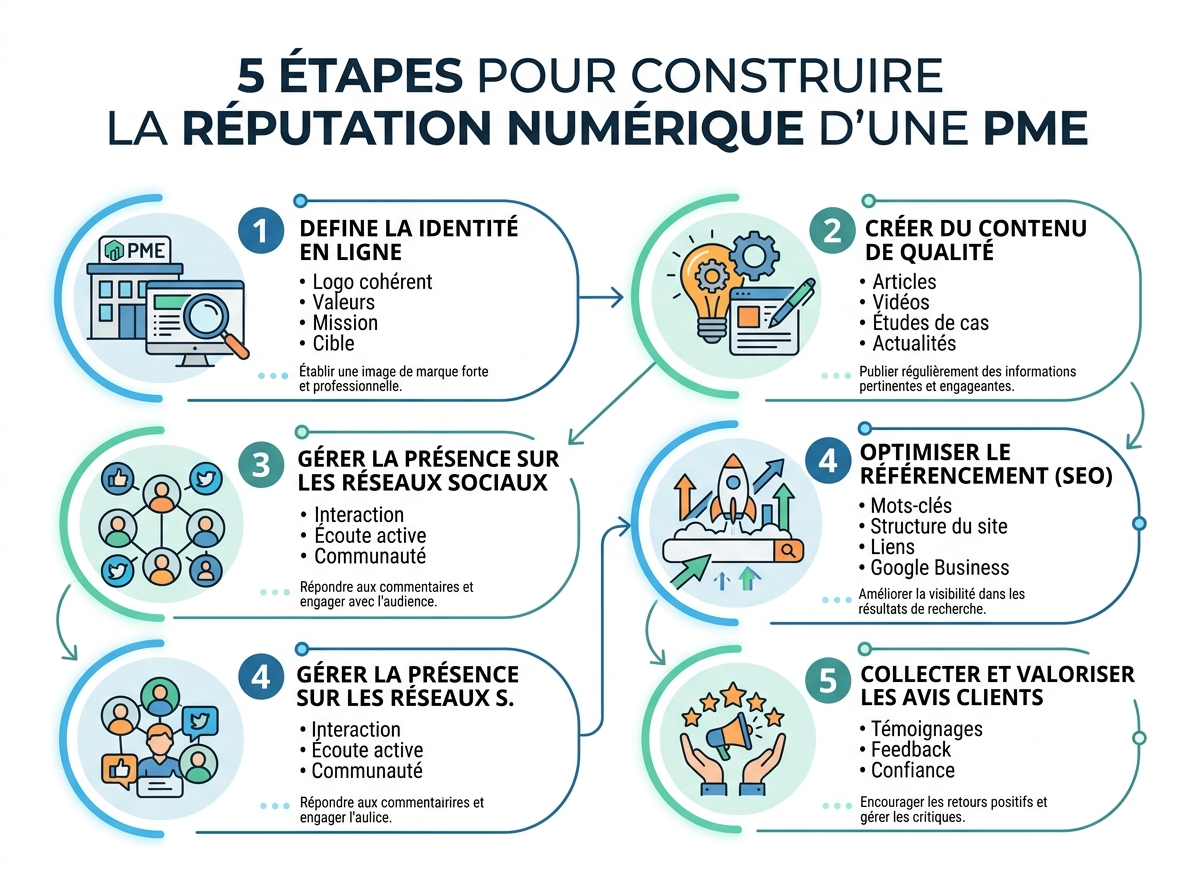
Here is the concrete method, in order of priority:
- Audit and correct NAP consistency: inventory all your online citations and standardise name, address, phone on each source.
- Optimise your Google Business Profile: complete 100% of the fields, add recent photos, activate secondary categories, respond to reviews.
- Implement structured Organization data in JSON-LD on your site, with
sameAsattributes pointing to your official profiles. - Create or enrich a Wikidata entry: describe your business with essential properties (name, sector, location, official website).
- Obtain mentions on authoritative sources: local press, sectoral directories, institutional partners — with links and consistent NAP.
This process generally takes 6 to 12 weeks to produce a visible Knowledge Panel. Digitalyser's 360° visibility audit allows you to start with a precise diagnosis rather than working blindly.
Entity reputation is no longer a topic reserved for large brands. It has become the foundation of any local and AI visibility strategy for SMEs. If you don't know the status of your entity today, that's exactly what a free audit reveals — in less than 48 hours.