

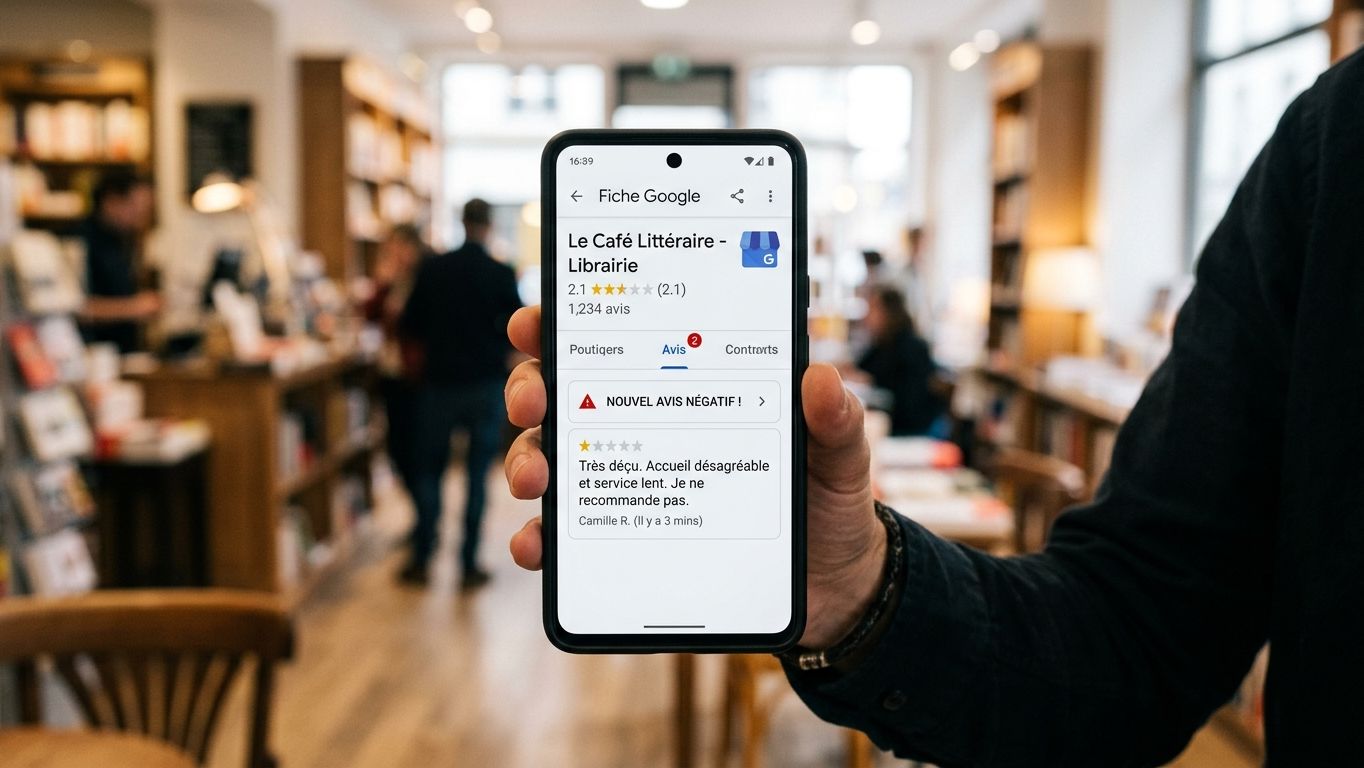
83% of consumers have already abandoned a purchase due to negative reviews about a business, according to the IFOP x Guest Suite study from January 2026. For a local business, a single mishandled comment can trigger a silent spiral: dozens of prospects walking away without ever telling you.
Good news: a professional, well-written response can reverse the trend. Here's how.
What an Unaddressed Negative Review Really Costs You

An unanswered negative review sends a strong signal to everyone reading your Google listing: the reported problem is real, accepted, and probably recurring. 81% of consumers admit to having avoided a business because they spotted a recurring problem in its reviews (IFOP, 2026).
And it's not just the overall rating that matters. Prospects read recent reviews, track negative patterns, and especially observe whether you respond. A 3.8/5 rating with carefully crafted responses often reassures more than a 4.5/5 rating with radio silence. This is what experts call the "trust gap": trust is not built on perfection, but on transparency.
Concretely, in a catchment area with 2,000 monthly searches, a negative review visible at the top of the list can cause your click-through rate to drop by 15 to 20%. If 10% of these lost visitors would have converted, that's potentially 30 to 40 customers per month evaporating — without you ever knowing.
The 4-Step Method for Responding Without Making Things Worse

Responding quickly is a must, but responding correctly is an art. The method below is used by reputation management teams across thousands of local establishments.
1. Acknowledge Receipt Within 24 Hours
Responsiveness is the first sign of seriousness. A response within 24 hours shows that you are monitoring your reputation. A response within 48 hours is still acceptable. Beyond that, you lose some of the impact.
Start with their first name if you have it, thank the author for taking the time to write — even if the message is virulent. This is not weakness; it's mastery.
2. Adopt Empathy Before Defence
The natural temptation is to justify yourself immediately. This is the most common mistake. The reader observing you — there are often 10 for every review — doesn't expect you to be right. They want to see that you are listening.
Effective phrase: "We are sincerely sorry that your experience did not meet our usual standards. This feedback is important to us." Short, human, without flattery.
3. Move Resolution Offline
Never debate the facts in public. Offer direct support: a dedicated email, a manager's number, a contact form. This shows that you take the problem seriously without turning your Google listing into a public debate.
Concrete example: a Parisian restaurateur responded to a 1-star review about a long wait with: "We invite you to contact us at [email] — our manager will get back to you within the day to find a suitable compensation." Result: the author changed their review to 4 stars two days later.
4. Turn the Detractor into Proof of Seriousness
Once the problem is resolved privately, you can (discreetly) ask if the person wishes to update their review. Never under pressure, always as an option. A negative review followed by a visible correction becomes one of the most powerful trust signals a business can display.
Mistakes That Systematically Worsen the Situation
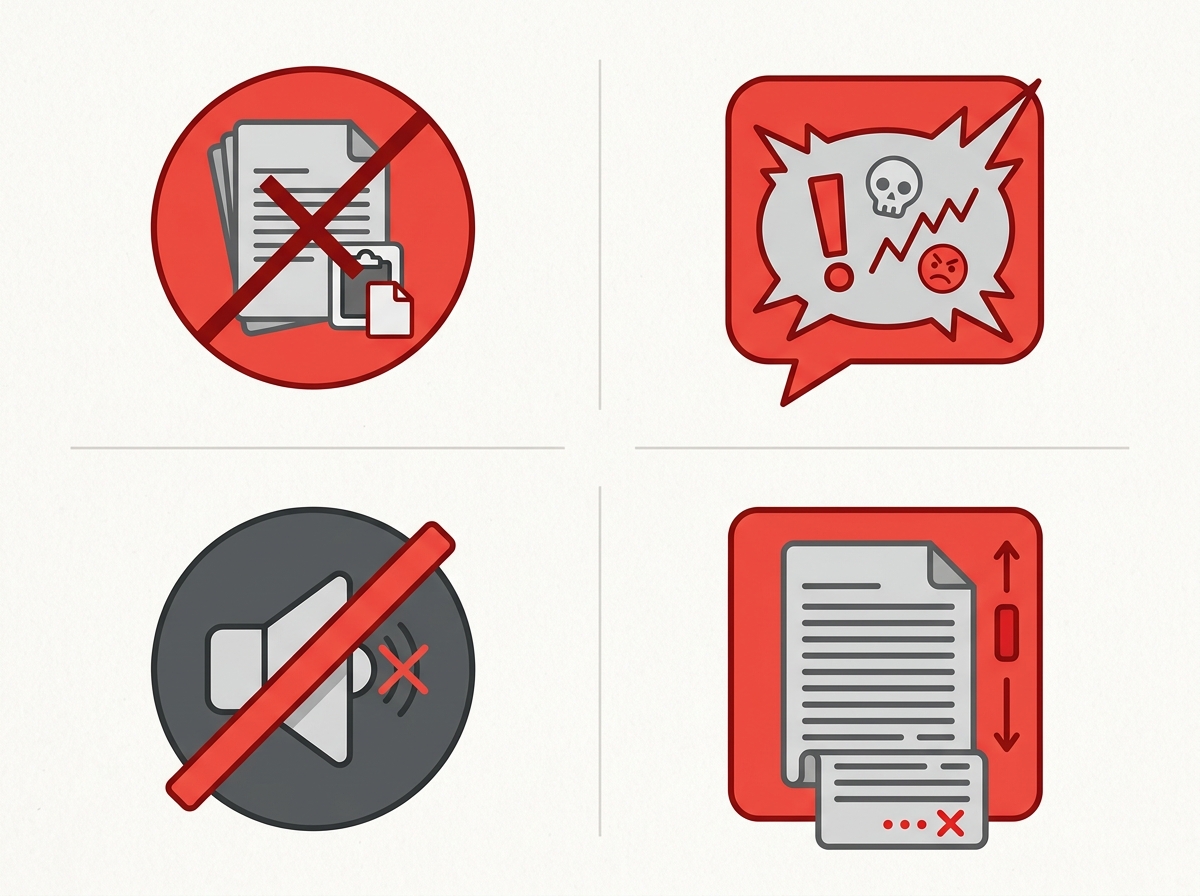
Some responses do more damage than silence. Here are the most common pitfalls observed in the field:
- The copy-pasted response: using the same generic text for every negative review is immediately spotted. It signals that no one has truly read the problem.
- The aggressive or defensive response: publicly disputing facts, accusing the customer of lying, or unleashing a long legal argument. The public reads "they never admit their wrongs."
- Total ignorance: not responding at all is the worst option. It implicitly validates the problem and signals a lack of follow-up.
- Over-explanation: an 8-line response for a 2-sentence review. Be concise — readers scan, they don't read.
- Promising without delivering: "We will immediately rectify this" followed by no visible action. If the problem is still reported in future reviews, the initial promise backfires.
Fake Reviews: What You Can Do
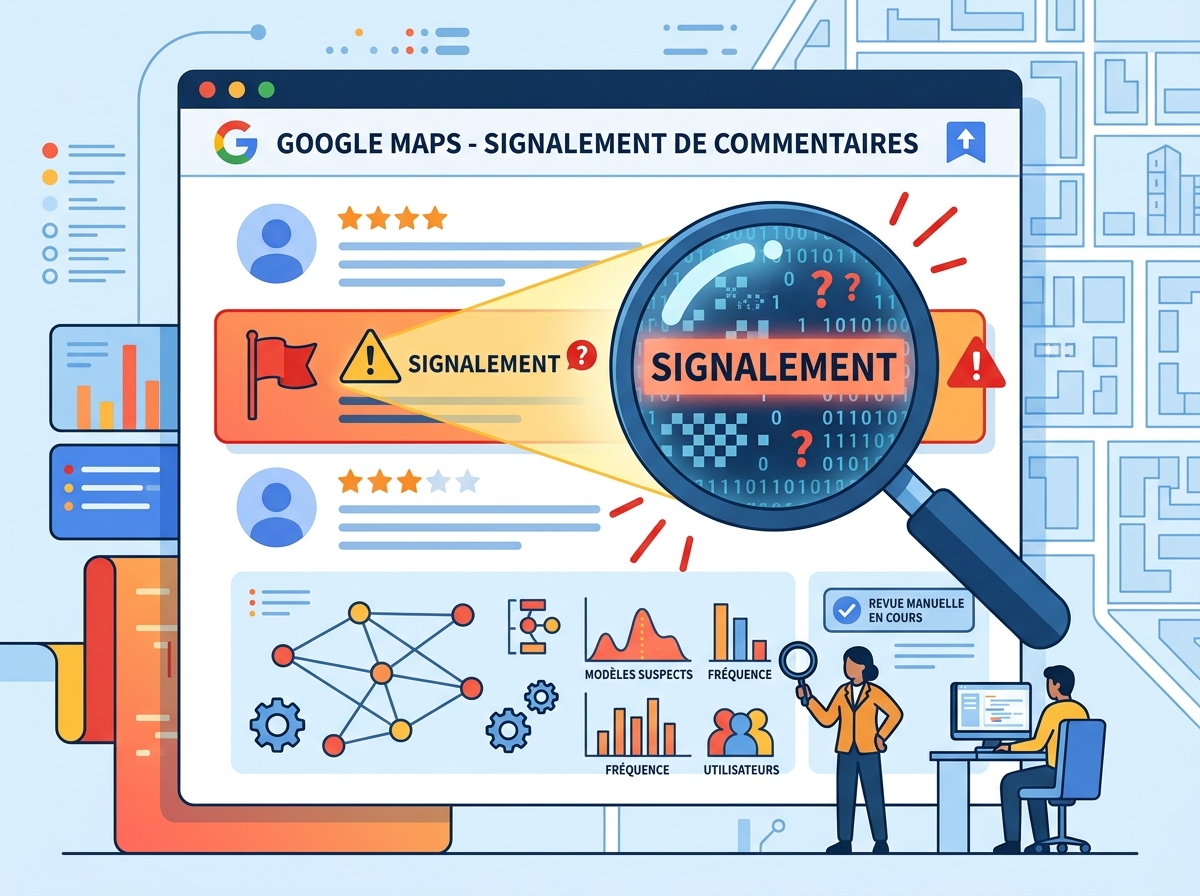
Not all negative reviews are legitimate. Unfair competition, reviews from people who have never been your customers, or blackmail attempts exist. The European Digital Services Act (DSA), in force since 2024, strengthens platforms' obligations to handle these reports.
On Google, the procedure for reporting an inappropriate review goes through the Google Business Profile panel. Valid reasons include: misleading content, conflict of interest, off-topic, spam. Processing time varies from a few days to several weeks.
Practical advice:
- Report the review via Google Business Profile (flag icon).
- Document your evidence if you dispute it (screenshots, exchanges, proof of non-purchase).
- In parallel, still respond publicly in a neutral way: "We cannot find any record of an interaction with you. Please feel free to contact us directly to clarify the situation."
Don't wait for deletion to respond. Prospects are reading now.
Monitoring Reviews: What Successful SMEs Really Do
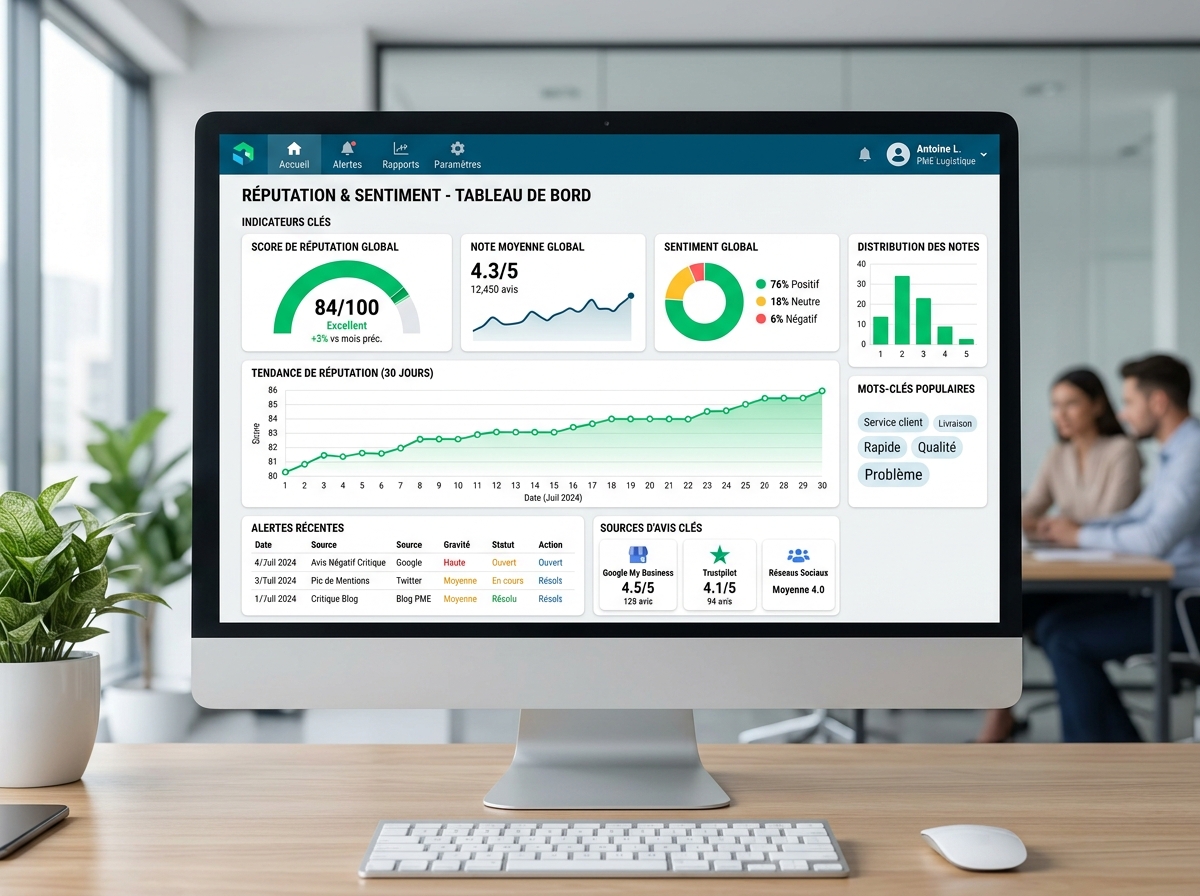
54% of French people are willing to pay more for a service provider with a better rating on Google (IFOP, 2026). This figure summarises the business challenge: your online reputation is directly correlated with your selling price and conversion rate.
Businesses that manage their reputation well have one thing in common: they don't discover negative reviews by chance. They have implemented active monitoring — email alerts, a centralised dashboard, weekly tracking. Partoo offers this type of monitoring, but its interface is still designed for structured marketing teams, with a cost and learning curve that often exceed the resources of an SME or independent business.
This is precisely the focus of Digitalyser's 360° visibility audit: to identify at a glance the warning signs about your reputation, your unaddressed reviews, and the platforms where your rating is penalising you without your knowledge.
What AI Agents Read About You Before Your Prospect Does
An often-overlooked angle: since 2025, ChatGPT, Gemini, and Google's AI Overviews aggregate reviews and online reputation to answer local queries. When a prospect asks "who is the best plumber in Lyon", the AI synthesises your Google reviews, your responses, and the consistency of your online presence.
A profile with unaddressed negative reviews and absent responses is likely to be discarded — or cited with reservations. Conversely, a well-maintained e-reputation becomes a signal of a reliable entity that search engines and AIs actively value.
This is why review management is no longer just "customer service": it's a full-fledged lever for local SEO and visibility. Every response you publish is indexed, read by algorithms, and contributes to your positioning in local results.
Moving From Reaction to Strategy
Managing negative reviews in "firefighter mode" — responding when a fire breaks out — remains insufficient. SMEs that transform their reputation into a competitive advantage systematically do three things:
- Proactively ask for reviews after every positive interaction, to mechanically dilute the weight of isolated negative reviews.
- Respond to all reviews, both positive and negative, within 48 hours.
- Analyse their negative patterns each month to identify the real sources of friction in their customer journey.
This discipline transforms every review into operational data. A recurring negative review about delays is not a reputation problem — it's a process signal to be corrected upstream.
If you are unsure about the current state of your reputation on Google and other platforms, an e-reputation and netlinking audit provides a clear view of your signals, your friction points, and the priority actions to regain control — before your prospects read them for you.